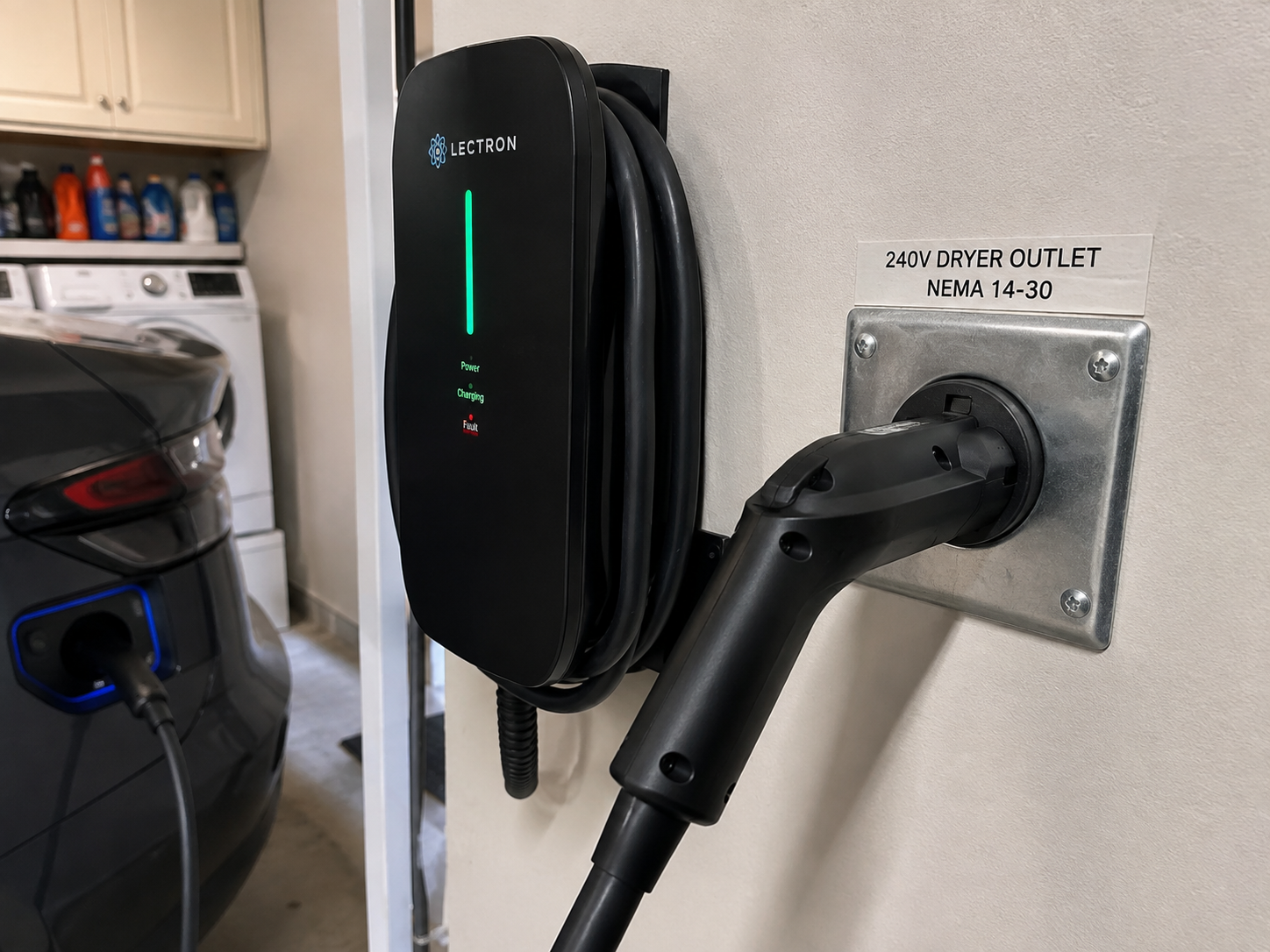
There’s a lot of well-meaning but incorrect advice floating around about EV charging at home. Here are two of the most common myths we hear from homeowners, and the reality behind them.
Myth: You can just plug your EV into your dryer outlet
This one comes up a lot, and it makes sense on the surface. A dryer outlet is 240 volts, and so is a Level 2 EV charger. So why not?
Here’s the problem. A dryer outlet and an EV charger have different plug configurations, different circuit designs, and the dryer’s circuit is often sized with specific amperage limits meant for that one appliance. Running a mismatched load through it can trip breakers, damage the outlet, or create a genuine fire hazard.
If you want to use that same electrical capacity for EV charging, the fix isn’t a clever adapter. It’s having a licensed electrician install a dedicated, correctly rated circuit and outlet built specifically for your charger. It’s a small additional step that protects your home and your investment in the vehicle.
Myth: Any electrician, or a handy homeowner, can install an EV charger
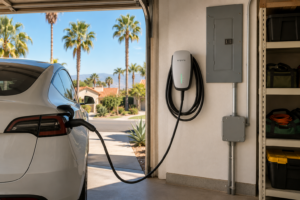
If you already have a properly rated outlet, like a NEMA 14-50, and you’re plugging in a portable Level 2 charger, that part really is plug and play. No debate there.
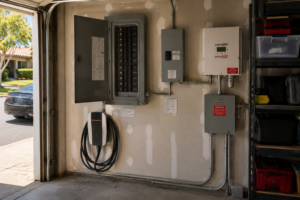
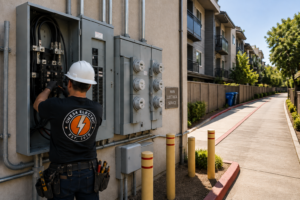
But the moment you’re talking about a new circuit, a new outlet, or a hardwired charger installation, that’s electrical work. In California, it requires a permit and a licensed electrician. This isn’t just a box to check. A licensed electrician makes sure the circuit is sized correctly for your specific charger, the breaker matches the charger’s amperage, and the whole installation passes inspection, which protects both your home and your charger’s warranty.
Skipping this step to save money upfront is one of the more common ways homeowners end up with tripped breakers, voided warranties, or worse, down the road. On the bright side, many EV charger installations are eligible for a rebate of some sort. Whether it is local or federal rebates, you will need to have an invoice and passed inspection report from a licensed electrician. With some of our clients, these rebates have covered or exceeded the cost of the installation.
The takeaway
EV charging at home is genuinely simple once it’s set up correctly. The myths above usually come from good intentions and a desire to save time or money, but they can end up costing more in the long run, both in dollars and in safety. If you’re not sure what your home’s setup can handle, that’s exactly the kind of question worth a quick conversation with a licensed electrician before you plug in anything new.