A panel upgrade on a single-family home is a well-understood process. Multi-unit and commercial properties are a different story. The same basic goal, more electrical capacity and a safer, code-compliant system, requires a much more involved process to get there. Here’s what property managers, HOA boards, and commercial property owners should know going in.
Why multi-unit properties are more complex
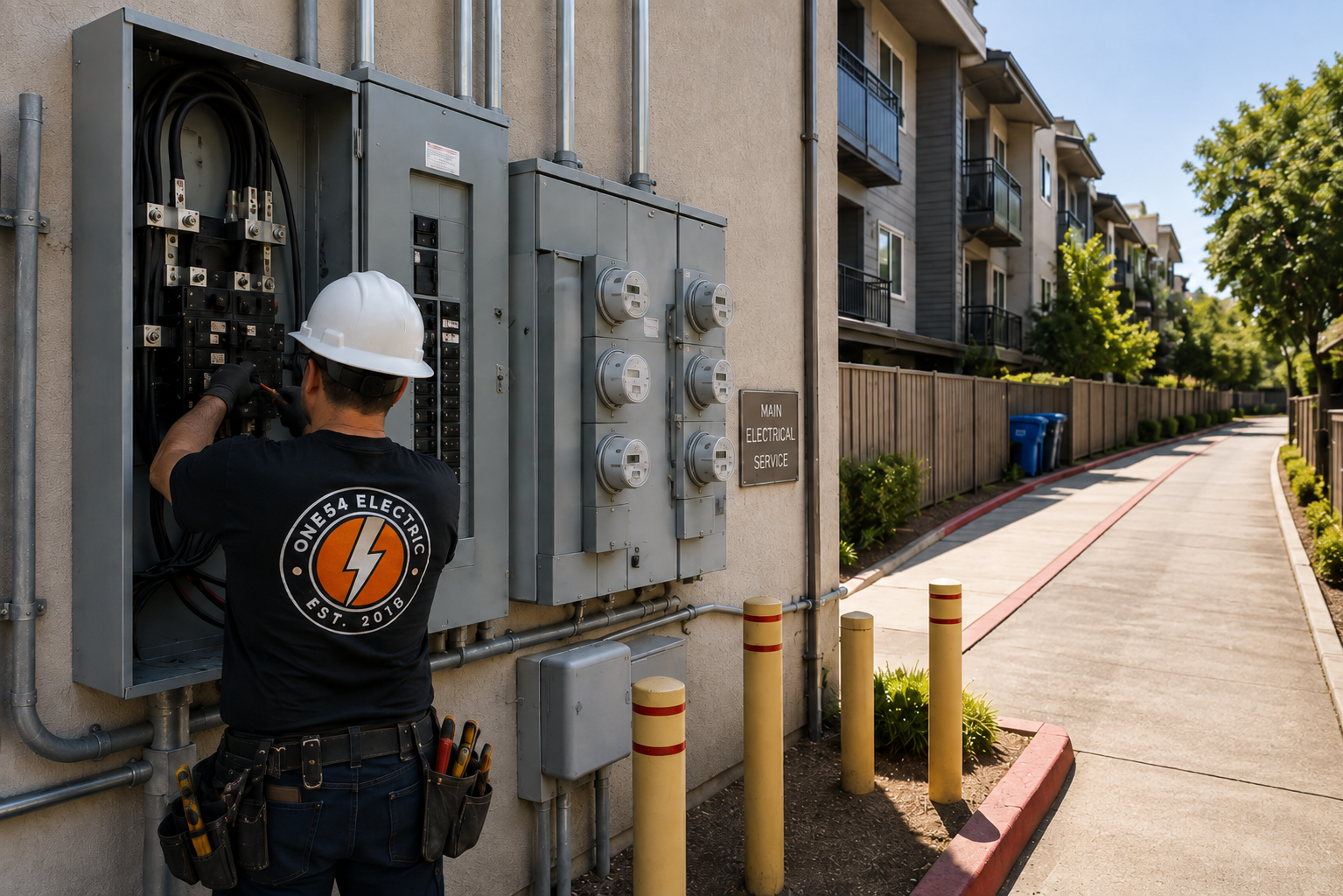
Shared infrastructure changes the math. Many multi-unit buildings have units that share a main service, sub-panels, or a house meter for common areas. A load calculation has to account for every unit’s demand, not just one home’s, which makes the assessment phase far more involved than a residential job.
Older infrastructure is common. A lot of multi-unit buildings are still running on original infrastructure, sometimes a single 100 or 200-amp main feeding a dozen units or more. Upgrading that kind of shared system takes more planning, and often more time, than a single home’s service upgrade.
Utility coordination takes longer. Because these projects usually involve a larger service upgrade, coordinating with the utility company is a bigger piece of the timeline. It’s not unusual for this step alone to take weeks longer than it would for a single-family home. LADWP, for example, requires a plot plan with proposed locations, a single line diagram and load calculations for each unit before they will even begin to review the project.
Permitting has more layers. Depending on the property, a multi-unit or commercial panel upgrade can involve city inspections, utility company sign-off, and sometimes HOA or property management approval, in addition to the standard permit. Each layer needs to be accounted for in the project timeline.
Tenant disruption has to be managed, not just tolerated. On a single-family job, one household loses power for a day. On a multi-unit property, an upgrade can mean coordinating shutoffs across several tenants’ units, which takes real scheduling experience to do without creating unnecessary disruption or complaints.
Why the licensed electrician matters even more here
The stakes are simply higher. A miscalculated load on a single-family panel is a problem for one household. A miscalculated load on a multi-unit panel is a problem for an entire building. Scheduling shutoffs across multiple tenants, sequencing the work correctly, and managing the additional permitting layers all require experience that goes well beyond what’s needed for a standard residential upgrade. This is exactly the kind of project where hiring a licensed, experienced C-10 contractor isn’t optional, it’s the only way to do it safely and correctly.
What a well-run multi-unit panel upgrade looks like
- A full load assessment across every unit, not just a spot check
- Utility coordination handled early, since it’s often the longest lead time in the project
- A phased shutoff schedule built to minimize disruption to tenants
- Final inspection and sign-off before the job is considered complete
If you’re planning one
Multi-unit and commercial panel upgrades take more coordination, but they don’t have to be disruptive or unpredictable when they’re planned properly. If you’re a property manager, HOA board member, or commercial property owner weighing a panel upgrade, reach out and we’ll walk you through what the process would look like for your specific property.